Get a Free Comfort Height Toilet Today
Steam Shower vs Standard Shower – What Wellness Features Actually Cost to Add
$4K–$12K
Cost added by steam capability
7–8 ft
Maximum ceiling height for steam
100%
Enclosure required, floor to ceiling
Lifetime
Warranty on every Carolina Creek install
The at-home wellness bathroom has moved past aspirational and into mainstream master bath planning. Steam showers, chromatherapy lighting, aromatherapy diffusers, digital shower controls, and integrated benches now appear in premium NC bathroom remodels with regularity. But between the marketing photos and the reality of what these features require to install correctly and safely, there is a meaningful gap — and the biggest cost surprise in most steam shower projects is discovering mid-project that the ceiling height, the enclosure design, or the ventilation was never engineered for steam in the first place.
This guide covers the honest cost, construction, and decision case for adding steam capability to a bathroom remodel — what a steam shower actually is versus a hot standard shower, the seven technical requirements that separate a working steam shower from an expensive mistake, the wellness add-ons worth including and the ones that are pure marketing, itemized NC market costs, and when the whole idea makes sense versus when a well-executed standard walk-in shower is the smarter money.
What Actually Makes a Steam Shower a Steam Shower
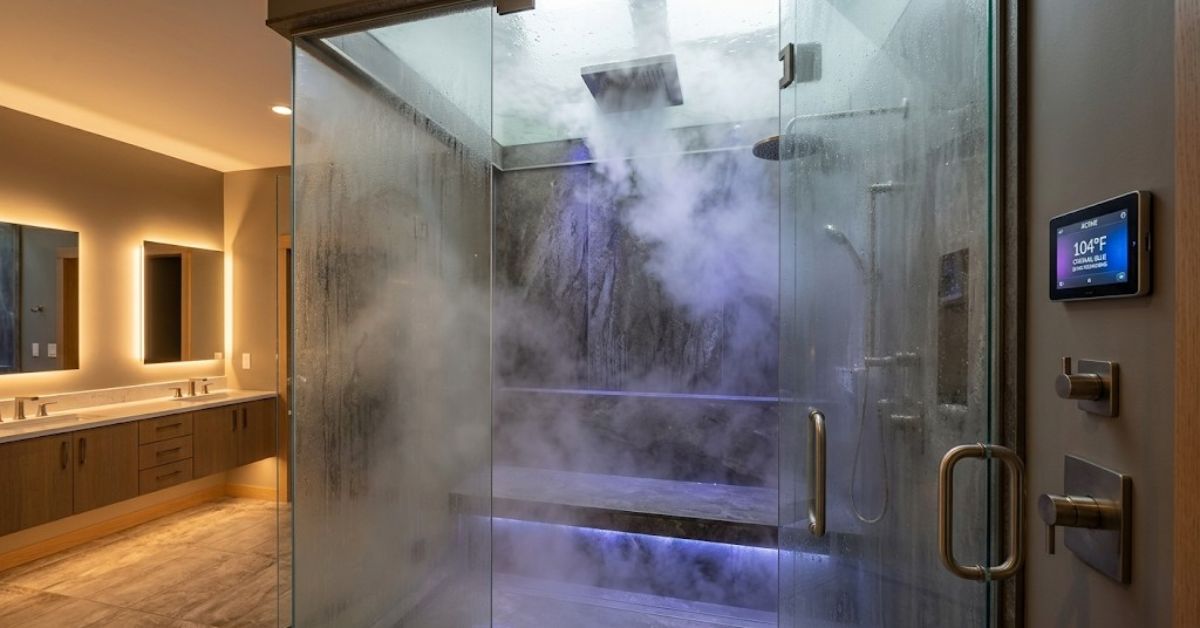
A steam shower is not a hot shower with more steam in the air. It is a purpose-built enclosed shower stall with an external steam generator that produces dry vapor at 110 to 118 degrees Fahrenheit, fed into the shower through a dedicated steam head, controlled by a digital control panel outside the enclosure, and contained by a floor-to-ceiling waterproof enclosure that prevents the steam from escaping into the rest of the bathroom.
The distinction matters because every element on that list is a real technical requirement. A standard walk-in shower with a glass door that stops six inches short of the ceiling cannot generate steam even if a steam generator is installed — the steam escapes as fast as it is produced. A shower without a dedicated steam generator cannot produce true steam regardless of how hot the water is; the ambient humidity from a hot shower is not the same thing as the 100 percent saturated dry vapor that steam therapy actually is.
The functional test: a working steam shower produces sustained visible steam clouds at floor level for the full duration of the steam session (typically 15 to 25 minutes) and maintains 110 to 118 degrees Fahrenheit interior temperature with 100 percent relative humidity throughout. Nothing else counts, no matter how hot it feels.
Seven Technical Requirements That Separate a Working Steam Shower From an Expensive Mistake
1. Ceiling Height Limited to 7 or 8 Feet Maximum
Standard 9-foot and 10-foot bathroom ceilings do not work for steam showers. Steam rises and dissipates faster than a residential-scale generator can replace it in a large enclosure volume. Ceilings need to be limited to 7 or 8 feet inside the steam enclosure — either by dropping the ceiling with a soffit or by building a lower shower cap. Any working steam shower design starts with confirming or creating the correct ceiling height.
2. Full Floor-to-Ceiling Enclosure
The steam shower must be fully enclosed — walls on all sides, glass or solid door with sweep, and a ceiling that meets the walls with sealed transitions. No open tops. No air gaps around the door. The enclosure functions as a sealed chamber for the duration of each steam session. This is the single largest visual difference between a steam shower and a standard walk-in shower, and it is not optional.
3. Sloped Ceiling Interior
Condensation forms on the interior ceiling of any steam shower. A flat ceiling drips water onto whoever is inside. The correct construction slopes the interior ceiling at a slight angle toward one wall so condensation runs down the wall rather than dripping. This slope is invisible from inside and adds no cost when planned during framing — but is impossible to add after finishing.
4. Waterproof Membrane Covering All Six Interior Surfaces
Standard shower waterproofing covers walls and floor. Steam shower waterproofing extends across the ceiling as well, with continuous sealed transitions at every corner. The steam permeates any unsealed interior surface, so an unsealed ceiling becomes the entry point for moisture into the ceiling cavity and the room above. Every interior surface must be treated as waterproof.
5. External Steam Generator Location
The steam generator (roughly the size of a shoebox to a suitcase depending on shower size) mounts in a nearby closet, vanity cabinet, mechanical room, or attic space — never inside the shower itself. It needs 240V electrical service, plumbed cold water supply, and a drain for periodic descaling. Access panels for annual maintenance. The generator location must be planned during the initial layout, because retrofitting one into an existing bathroom is dramatically more expensive.
6. Vapor-Rated Recessed Lighting Only
Standard recessed lighting cans, even damp-rated versions, are not rated for the sustained saturated vapor environment inside a steam shower. Vapor-rated (also called “steam-rated”) fixtures are required inside the enclosure. Standard fixtures inside a steam shower fail within months and create electrical shock risk during use.
7. High-Performance Exhaust Ventilation on Timer
The bathroom itself (not the steam shower interior) needs a dedicated exhaust fan at 150 to 200 CFM, on a 60-minute timer that starts automatically when a steam session begins. The fan runs during and for 30 to 45 minutes after each session to remove the saturated air that escapes when the door opens. Without adequate post-steam ventilation, the bathroom becomes a mold generator despite the steam shower itself being sealed.
The installer qualification test: Ask any contractor proposing a steam shower to walk through all seven requirements above. A qualified installer answers each with specific product references, dimensions, and code details. A contractor who deflects on any of the seven is not the right choice for a steam shower project. This is not standard bathroom work and standard bathroom contractors often cannot deliver it correctly.
Wellness Add-Ons Worth Including — and the Ones That Are Marketing
Worth Including
- Built-in bench with drainage slope. A stone panel bench along one wall (typically 18 inches deep, 17 to 19 inches high, 30 to 60 inches wide) with subtle downward slope for water drainage. Non-negotiable for actual steam use — sitting is how steam sessions work. Adds $600 to $1,400 to construction.
- Chromatherapy LED lighting. Waterproof color-changing LED strips or recessed fixtures inside the shower that cycle through calming colors during steam sessions. Well-supported by wellness research (blue and green light shown to enhance relaxation response). Adds $400 to $900 installed.
- Aromatherapy reservoir. A small port near the steam head that accepts essential oil drops (eucalyptus, lavender, mint) which diffuse into the steam. Simple, effective, and the most-used wellness add-on for actual homeowners. Adds $200 to $500.
- Digital control panel outside the enclosure. Programmable temperature, duration, and preset user profiles. The user experience is dramatically better than mechanical timers. Included with most quality steam generators; upgrade to premium controls adds $300 to $700.
- Waterproof audio speakers. Ceiling-mounted vapor-rated speakers with Bluetooth connectivity. For homeowners who genuinely use their steam shower daily, having audio is a real quality-of-life upgrade. Adds $400 to $900 installed.
Mostly Marketing
- “Smart” WiFi-connected steam controls. Starting your steam shower from your phone before you get home sounds appealing. In practice, homeowners start the steam when they walk into the bathroom — the WiFi remote gets used rarely and adds $400 to $800 to no meaningful benefit.
- Body spray jets on the wall. Multiple horizontal spray heads at torso height. In a steam shower the water demands compete with the steam ambiance, and the jets rarely get used once the novelty wears off. Adds $2,000 to $4,000 to a project that already has plenty of ways to spend.
- Waterfall shower head. Attractive in marketing photos, wasteful in real use. Uses 4 to 8 gallons per minute (vs 2 GPM for standard heads) and provides a shower experience most people prefer less than a rainhead. Skip.
- “Salt cave” or halotherapy add-ons. Marketed as spa-luxury upgrades. Genuine halotherapy requires medical-grade equipment far beyond anything appropriate for a residential bathroom. Anything sold at residential scale is largely aesthetic. Skip.
Steam Shower vs Well-Executed Standard Walk-In Shower — Side by Side
| Factor | Standard Walk-In Shower | Steam Shower |
|---|---|---|
| Total Installed Cost | $8K–$14K | $14K–$28K |
| Steam Capability Premium | n/a | +$4K–$12K |
| Ceiling Height Required | Standard 8–10 ft | Limited to 7–8 ft |
| Enclosure Style | Frameless glass, may be open-top | Fully sealed floor to ceiling |
| Ventilation Required | 100–150 CFM | 150–200 CFM with auto timer |
| Electrical Service | Standard 120V circuit | Dedicated 240V circuit |
| Annual Maintenance | Silicone reseal every 8–10 years | Generator descale annually |
| Session Duration | 5–15 min typical | 15–25 min steam + shower |
| Resale Positioning | Modern premium standard | True luxury signal in premium markets |
Itemized Steam Shower Cost Breakdown — NC Market
Optional Wellness Add-Ons
- Chromatherapy LED lighting: +$400 to $900
- Aromatherapy reservoir port: +$200 to $500
- Waterproof audio speakers: +$400 to $900
- Premium digital controls with presets: +$300 to $700
When a Steam Shower Makes Sense — and When It Doesn’t
The honest alternative: For most Tier 2 and Tier 3 remodels, a beautifully executed standard walk-in shower with composite stone panels, curbless entry, integrated bench, chromatherapy accent lighting, and premium fixtures delivers 80 percent of the daily wellness benefit at 40 percent of the cost. Our approach across Lake Norman stone shower installations and Davidson custom stone shower projects often delivers the “wellness shower” experience homeowners actually want without the full steam capability overhead.
FAQ — Steam Showers
Can I add steam capability to my existing walk-in shower?
Rarely without a full shower rebuild. Steam requires the seven technical requirements listed above — sealed enclosure, sloped ceiling, extended waterproofing, vapor-rated lighting, upgraded ventilation. An existing walk-in shower typically has none of these. Retrofitting steam capability usually means demolishing the existing shower and rebuilding it as a steam shower, at roughly 90 percent of new-construction cost.
How long do steam sessions actually last?
Typical steam sessions run 15 to 25 minutes, with a shower to rinse afterward. Most digital controls default to a 20-minute session with automatic shutoff. Sessions longer than 25 minutes are discouraged by health guidelines for most adults; the digital control panels prevent runaway operation.
What is the annual operating cost of a steam shower?
Electricity and water for typical 3-times-per-week use runs $8 to $18 per month in most NC utility markets, plus $80 to $200 annually for descaling maintenance. Not a decision-driver either way, but worth including in the honest picture.
Do steam showers have health benefits?
Regular steam bathing is reasonably supported for muscle recovery after exercise, temporary relief of nasal congestion, and general relaxation and sleep quality. The strongest evidence points to the same benefits as sauna use — cardiovascular effects from regular heat exposure, temporary stress reduction, and skin cleansing. What steam is not: a weight loss tool, a detox mechanism, or a treatment for specific medical conditions. Enjoy it for what it is — a relaxation practice with modest supporting health evidence.
Where do I get a steam shower properly built?
Any steam shower project should start with a contractor who can demonstrate all seven technical requirements with photos and references from completed steam installations. Carolina Creek Tub & Shower includes steam shower work as part of premium Tier 3 and Tier 4 master bathroom projects across Lake Norman luxury bathroom remodels, Davidson master bath projects, Cornelius master bath renovations, and every other city in our NC service area — with honest guidance on whether the value case actually works for your specific bathroom and usage pattern.
Related Premium Master Bathroom Services
- Luxury Bathroom Remodeling Lake Norman — Lake Norman master bathroom services including steam shower work.
- Luxury Master Bathroom Remodeling Davidson, NC — Davidson master bathroom design and premium features.
- Luxury Master Bath Remodeling Cornelius, NC — Cornelius premium master bath renovations.
- Premium Stone Shower Design Lake Norman — Lake Norman composite stone shower installations.
- Custom Stone Shower Installation Davidson, NC — Davidson custom stone shower work.
- Master Bathroom Remodeling Huntersville, NC — Huntersville master bathroom services.
Get an Honest Steam Shower Recommendation
Owner-led consultations, proven steam installation experience with references, honest guidance on whether steam capability matches your usage and budget, itemized written quotes, and a lifetime warranty on every installation.