Get a Free Comfort Height Toilet Today
Bathtub Installation vs Tub Replacement – What Changes and What It Costs
$2.4K–$14K
Full cost range across all tub scenarios
1–5 Days
Typical installation timeline
4 Scenarios
Homeowners actually face
Lifetime
Warranty on every Carolina Creek install
“Installation” and “replacement” sound like different words for the same thing when it comes to bathtubs — but in the remodeling world they describe meaningfully different scopes of work with meaningfully different costs and timelines. A homeowner calling for a “tub replacement quote” and a homeowner calling for a “tub installation quote” are often describing different projects, and the confusion regularly leads to budget surprises when the actual scope becomes clear during consultation.
This guide clarifies the difference — starting with the four distinct scenarios homeowners actually face (drop-in replacement, upgraded replacement, first-time installation, and tub-to-shower conversion), what changes in each scope, what stays the same, and honest cost ranges for the NC market. Understanding which scenario matches your situation is the first step to getting quotes that actually reflect the work involved.
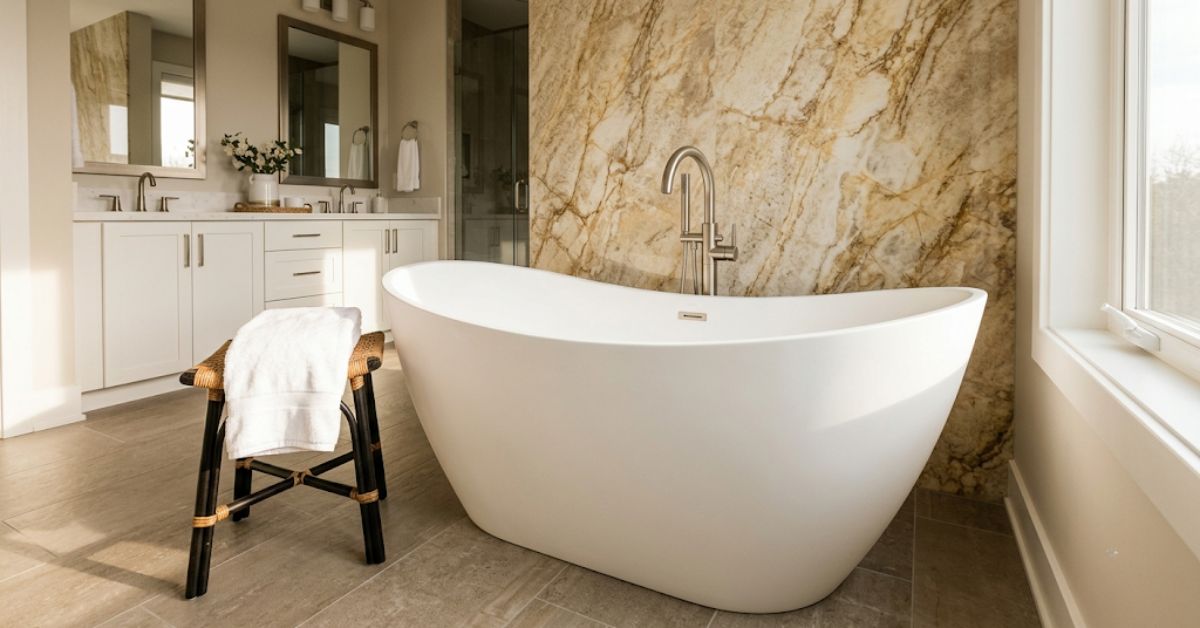
Definitions — Getting the Terms Straight
Tub Replacement
Removing an existing bathtub and installing a new one in the same location, using the existing plumbing rough-in and (typically) the existing tub surround structure. Sometimes called a “swap” in trade shorthand. Cost is at the low end of the tub-work range because most of the underlying infrastructure is already in place.
Tub Installation
Broader category. Includes any tub work where the new tub is a different type, sits in a different location, requires new plumbing rough-in, or is being installed in a bathroom that did not previously have a tub. Cost varies dramatically depending on scope — from moderate (upgraded replacement) to substantial (relocating plumbing for a freestanding tub).
Tub-to-Shower Conversion
Not a tub installation at all — but the fourth scenario homeowners frequently ask about in the same call. Removes the existing tub entirely and replaces it with a walk-in shower using the same footprint. Cost and scope differ from any tub work, and it is often the right answer for homeowners whose tub sits unused.
The Four Scenarios Homeowners Actually Face
Scenario 1
Drop-in Replacement
Drop-in Replacement
$2,400–$4,800
Same tub type, same footprint, same plumbing location. Cast iron for cast iron. Alcove for alcove. Minimal scope creep. 1–2 day install.
Scenario 2
Upgraded Replacement
Upgraded Replacement
$4,000–$8,500
Different tub type in same footprint. Alcove to soaking tub, or jetted tub to freestanding tub. Plumbing modification usually required. 2–4 day install.
Scenario 3
First-Time Installation
First-Time Installation
$7,000–$14,000
Adding a tub where none existed, or relocating a tub. Full plumbing rough-in required. May involve structural work. 3–5 day install.
Scenario 4
Tub-to-Shower Conversion
Tub-to-Shower Conversion
$6,500–$12,000
Remove tub entirely, install walk-in shower in same footprint. Often the right answer when the tub is rarely used. 3–5 day install.
Scenario 1: Drop-in Replacement — Same Type, Same Location
The simplest tub work possible. The existing tub has cracked, chipped, or aged out but the underlying rough-in is fine. A new tub of the same type (typically alcove) drops into the existing footprint using the existing supply, drain, and overflow connections. The tub surround (tile or panels) sometimes needs partial repair where the old tub met the wall, but often can be preserved with minimal patching.
What Is Included
- Removal and disposal of the existing tub.
- Reconnection of supply, drain, and overflow at existing rough-in.
- Setting and leveling the new tub (typically alcove-style acrylic or steel-enameled).
- Sealing the tub-to-wall joint with color-matched sanitary silicone.
- Minor patching where the tub deck meets adjacent tile or wall.
What Is Not Included (And Why That Matters)
A drop-in replacement does not refresh the surrounding surround, does not upgrade the shower fixtures or valve, and does not address any waterproofing failures in the existing walls. If the tile around the tub is dated, discolored, or moldy, a drop-in replacement puts a new tub in a bathroom that still looks tired. Most homeowners who describe themselves as needing a “drop-in replacement” quickly reconsider once they see the visible contrast between the new tub and the aging surround.
Scenario 2: Upgraded Replacement — Different Tub Type, Same Footprint
The most common scenario in Tier 2 and Tier 3 bathroom remodels. The tub location and general footprint stay the same, but the tub type changes — most often from a builder-grade alcove or oversized jetted tub to a modern freestanding soaking tub, or from an alcove tub to a drop-in tub with deck surround. Plumbing modification is almost always required because different tub types use different supply-and-drain configurations.
Common Upgrade Paths in NC Remodels
- Jetted tub to freestanding soaking tub. The most impactful single change in many 1990s and 2000s NC master baths. Removes a bulky under-used feature and replaces it with a sculptural centerpiece.
- Alcove tub to drop-in tub with deck surround. Adds the visual weight of a designed deck around the tub without moving the plumbing significantly.
- Standard tub to walk-in tub. Aging-in-place upgrade. Same footprint but with a swing-in door and integrated seating. Requires modest plumbing work.
- Cast iron alcove to acrylic freestanding. Weight reduction can matter for upper-floor bathrooms — cast iron tubs weigh 300+ pounds empty; acrylic freestanding tubs weigh 60–120 pounds empty.
The Plumbing Complications
Different tub types need different plumbing configurations. Alcove tubs supply from an in-wall valve; freestanding tubs typically use floor-mount or wall-mount tub fillers positioned near the tub itself. Jetted tubs require dedicated electrical circuits that are then removed when the tub is replaced. Drain configurations differ between center-drain and end-drain tubs. Every upgrade path involves at least some plumbing modification, and premium upgrades (freestanding tub with floor-mount filler) can involve substantial floor work to route new supply lines.
Scenario 3: First-Time Installation — Adding or Relocating a Tub
The most involved of the tub-work scenarios. The bathroom either did not previously have a tub (adding one) or the tub is being moved to a different location within the bathroom (relocating). Both cases require full plumbing rough-in for supply, drain, and overflow — plus structural evaluation for the intended tub location, especially in upper-floor bathrooms where the loaded tub weight matters.
Considerations That Only Apply to First-Time Installation
- Structural load evaluation. A freestanding soaking tub holds 40 to 80 gallons of water plus a person — meaningfully heavier than typical bathroom fixture loads. Upper-floor installations require verification that the floor structure supports the loaded weight. In most NC construction this is not a problem, but the check must be done during design.
- Access route for tub delivery. A 66-inch freestanding tub cannot always be maneuvered up narrow historic-home staircases, through undersized doorways, or around tight hallway turns. Confirm access route before ordering the tub — some remodels have required removal of doorframes or partial disassembly of hallway trim.
- Full plumbing rough-in. New supply lines run to the tub location, drain routing to existing waste stack, potentially new venting depending on layout and local code requirements. Often involves opening floor or wall structure below the bathroom.
- Permit requirements. Plumbing modifications trigger permits in most NC jurisdictions. Adding a tub where none existed almost always requires inspection.
Scenario 4: The Alternative — Tub-to-Shower Conversion
Often the right answer when the existing tub is barely used. NKBA data shows the average American takes fewer than 5 baths per year — most tubs in NC master bathrooms are functionally used as elaborate shower stalls with a difficult step-over. If the tub is not delivering value as a tub, converting the footprint to a walk-in shower delivers both better daily function and often better resale positioning.
When Tub-to-Shower Conversion Wins
- The tub is used less than once a month.
- Aging-in-place is a genuine planning consideration — stepping over a tub wall becomes a fall risk as mobility declines.
- The home has at least one other tub in a secondary bathroom (preserves resale flexibility for buyers who want a tub somewhere).
- The current tub is a bulky jetted design taking up master-bath real estate that a walk-in shower could use better.
When to Keep or Upgrade the Tub Instead
Small children in the household who need bathing in a tub. A homeowner who genuinely uses the tub weekly for relaxation. A single-bathroom home where removing the only tub could hurt resale to families with young children. In any of these cases, upgraded replacement (Scenario 2) is often the better path. Our approach to Lake Norman walk-in tub installation, Davidson walk-in tub services, and Matthews walk-in tub work exists precisely for households where the tub genuinely earns its footprint but the current version needs an accessibility upgrade.
Cost and Timeline Side by Side
| Scenario | Cost Range | Timeline | Permit Required |
|---|---|---|---|
| Drop-in Replacement | $2,400–$4,800 | 1–2 days | Usually no |
| Upgraded Replacement | $4,000–$8,500 | 2–4 days | Yes (plumbing) |
| First-Time Installation | $7,000–$14,000 | 3–5 days | Yes (always) |
| Tub-to-Shower Conversion | $6,500–$12,000 | 3–5 days | Yes (plumbing) |
The itemization principle: Any quote for tub work should identify which scenario applies and itemize the scope accordingly. Vague “install new tub” quotes without scope specification hide whether the price includes plumbing modification, surround repair, disposal, or permits. Ask for the scope in writing before committing.
FAQ — Bathtub Installation and Replacement
Can I do a tub replacement without touching the surrounding tile?
Almost never fully. Even a same-type drop-in replacement typically requires cutting into the tile at the tub-wall joint to remove the old tub and re-sealing at the joint with the new one. Some minor tile damage should be expected and planned for. If the surrounding tile is dated or damaged already, this is often the moment to plan for a wider refresh rather than trying to preserve tile that will need replacement soon anyway.
Do I need to be home during a tub installation?
Not the entire time, but a homeowner or authorized representative should be available for the start of demolition, for any discoveries or scope changes during the work, and for the final walkthrough. Most tub work in an occupied home creates minimal disruption to the rest of the house; if it is the only bathroom, plan for 1 to 2 nights of alternative arrangements during peak plumbing and installation days.
What is the difference in maintenance between tub types?
Acrylic and steel-enameled tubs both wipe clean with standard bathroom cleaners and require no special care. Cast iron tubs are essentially permanent and take a beating without showing damage. Jetted tubs require periodic circulation cleaning to prevent buildup in the jet lines — this maintenance is one of the reasons homeowners eventually replace them. Freestanding soaking tubs have no maintenance beyond routine cleaning; the freestanding design also makes them easier to clean around than deck-mounted or alcove tubs.
How long do bathtubs actually last?
Cast iron tubs last essentially forever — 100+ years is not uncommon. Steel-enameled tubs last 30 to 50 years. Acrylic tubs last 20 to 30 years before showing wear that suggests replacement. Jetted tubs functionally age out in 15 to 25 years as the jet motors and lines degrade. Failure modes vary: cast iron shows chipping and rust at the drain, acrylic shows scratches and yellowing, steel-enameled shows chipping at heavy-use edges.
Where do I get honest guidance on which scenario fits my situation?
A qualified installer walks through all four scenarios during consultation and helps you decide which fits your specific tub usage, remodel budget, and long-term plans for the home. Carolina Creek Tub & Shower delivers this consultation approach across Lake Norman luxury bathroom projects, Davidson master bathroom work, and every other city in our NC service area — with honest recommendations rather than defaulting to the highest-margin scope.
Related Tub and Master Bath Services Across NC
- Walk-In Tub Installation Lake Norman — Lake Norman walk-in tub installation and aging-in-place upgrades.
- Walk-In Tub Installation Davidson, NC — Davidson walk-in tub services.
- Walk-In Tub Installation Matthews, NC — Matthews walk-in tub installations.
- Luxury Bathroom Remodeling Lake Norman — full master bath scope including tub upgrades.
- Luxury Master Bathroom Remodeling Davidson, NC — Davidson master bathroom projects.
- Master Bathroom Remodeling Huntersville, NC — Huntersville master bathroom services.
Get an Honest Scope Recommendation for Your Tub Project
Owner-led consultations, all four scenarios explained honestly, itemized quotes showing scope and materials, plumbing modifications specified upfront, and a lifetime warranty on every installation.