Get a Free Comfort Height Toilet Today
ADA-Compliant Bathroom Remodeling — What It Means for Homeowners in Concord, NC
90%
Adults over 65 who prefer to age in place at home
36″
ADA minimum clear floor width for accessible bathrooms
1–4 Days
Typical accessible bathroom installation time
Lifetime
Warranty on all parts, materials, and labor
The term “ADA-compliant bathroom” gets used often in remodeling conversations, but most homeowners in Concord, NC — and throughout the Cabarrus County area — aren’t entirely clear on what it means in practice. The Americans with Disabilities Act establishes specific design standards for public commercial spaces and multi-family housing, but residential homeowners are not legally required to meet ADA standards. So why does the term matter for your home remodel?
Because the underlying principles of ADA design — clear floor space, grab bar placement, threshold heights, fixture reach ranges — translate directly into the safest and most functional bathroom layouts for anyone who wants to use their home safely for decades to come. This guide explains what ADA-compliant bathroom remodeling means for Concord homeowners, what specific features it includes, and how to plan a bathroom that is both accessible and genuinely well-designed.
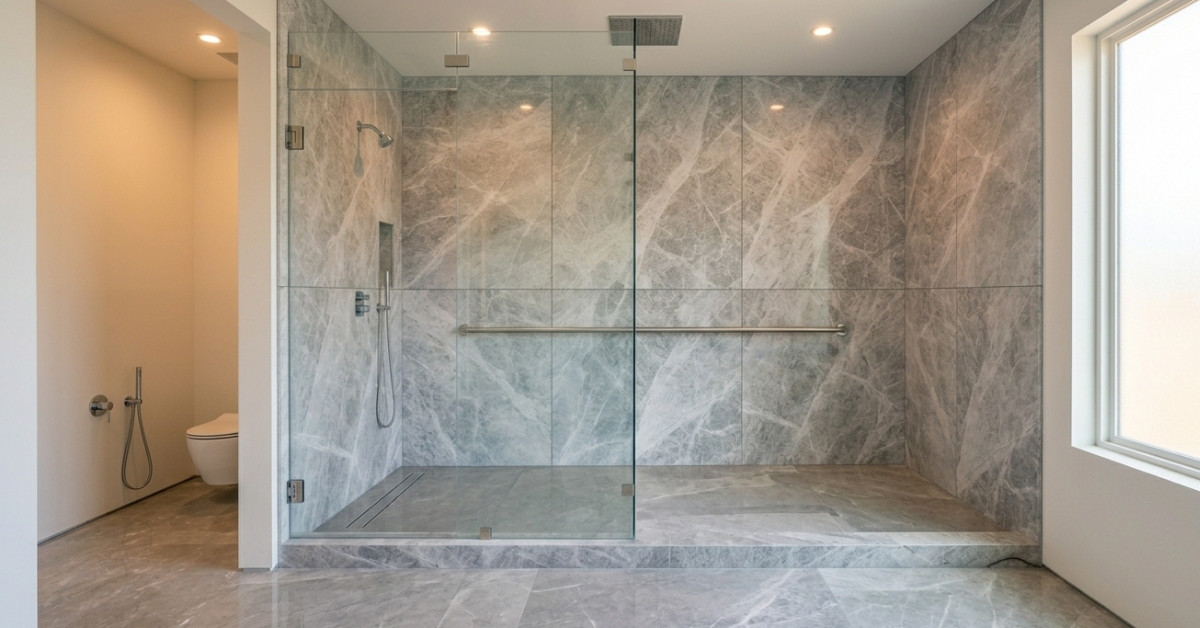
What ADA-Compliant Actually Means for a Residential Bathroom in Concord
In commercial and public settings, ADA compliance is a legal requirement. In a private residence, the same standards serve as the best available reference point for designing a bathroom that is genuinely safe and functional for people with mobility limitations, balance issues, or reduced strength — and for everyone who will eventually be older than they are today.
When a Concord homeowner asks for an “ADA-compliant bathroom remodel,” they are typically asking for a combination of the following features designed to meet or approximate ADA guidelines:
Clear Floor Space
At least 60″ diameter turning radius within the bathroom for wheelchair or walker navigation. Minimum 36″ clear width at doorways.
Curbless Shower Entry
No threshold to step over. The shower floor transitions flush to the bathroom floor, with a properly sloped drain to manage water flow.
Grab Bars
Mounted at 33″–36″ height along the shower walls, beside the toilet, and at entry points. Must be secured into wall blocking capable of supporting 250 lbs.
Comfort-Height Fixtures
Toilets at 17″–19″ seat height (vs. 15″ standard), and vanity countertops at 34″ max to accommodate seated users.
Non-Slip Flooring
Shower floor material with a minimum slip-resistance rating of 0.6 wet coefficient of friction. Stone bases and textured tile meet this standard when properly specified.
Handheld Showerhead
A slide bar-mounted handheld showerhead that adjusts from seated to standing height, with a minimum hose length of 59″.
Why Concord and Cabarrus County Homeowners Are Requesting Accessible Bathrooms
Concord is one of the fastest-growing areas in the Charlotte region, and the population includes a significant number of established homeowners who have lived in the area for 20 to 30 years — many of whom are now in their 50s, 60s, and 70s and planning their homes for the next chapter.
Aging in Place Planning
The most common driver for accessible bathroom remodeling in Concord is proactive planning — homeowners who are healthy today but want to ensure their home works safely as they age. Installing grab bar blocking in walls now costs very little compared to retrofitting it in finished walls later. Adding a curbless shower entry during a remodel is straightforward; adding it as a standalone retrofit later requires tearing out existing flooring and addressing the drain configuration from scratch.
Caring for a Family Member with Mobility Needs
The second most common driver is a specific immediate need — a parent moving in, a spouse recovering from surgery, or a household member managing a long-term condition that affects balance or mobility. These projects tend to move faster and prioritize function over aesthetics, but the best contractors deliver both.
Post-Injury or Post-Surgery Recovery
A bathroom designed around ADA principles significantly reduces fall risk during recovery from hip replacement, knee surgery, or other procedures that temporarily affect mobility. Many homeowners who initially plan a short-term accessibility modification discover that the upgraded bathroom is so functionally superior to what they had before that they keep all the features permanently.
The cost-timing principle: Every accessible feature you add during an existing remodel costs a fraction of what it would cost as a standalone retrofit. Grab bar blocking in a wall being tiled adds almost nothing. The same blocking in a completed finished wall requires opening the wall, adding the blocking, patching, retiling, and repainting — a project that can cost $1,500 to $3,000 for what was a $50 upgrade during the original remodel.
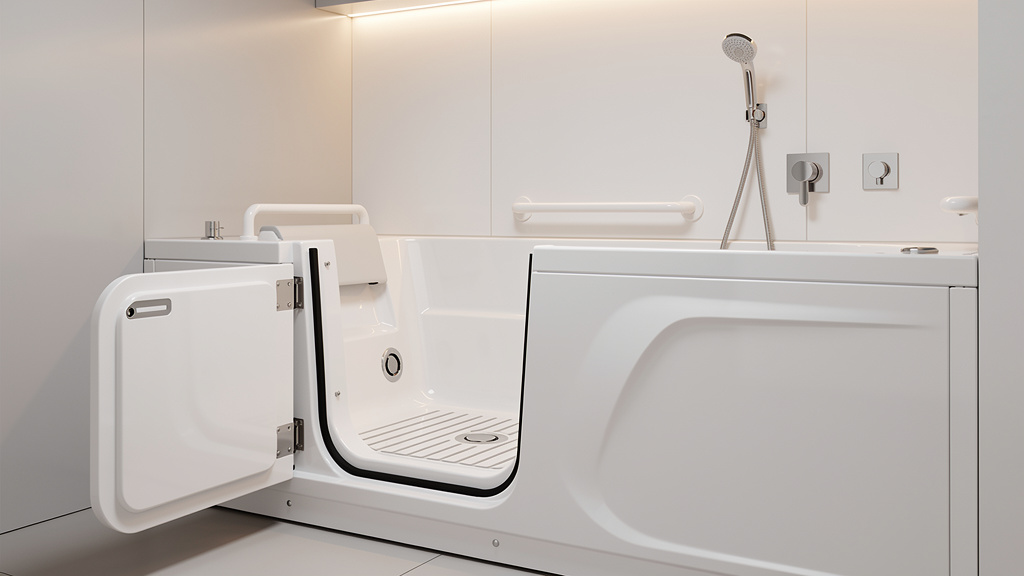
ADA-Compliant Bathroom Features Explained for Concord Homeowners
Curbless (Zero-Threshold) Showers
A curbless shower — also called a barrier-free or zero-threshold shower — has no step or raised edge at the entry. Water is managed by a properly sloped floor that directs drainage toward the drain without allowing it to escape the shower zone. This is the most significant single accessibility upgrade in a bathroom: it eliminates the most common trip hazard for older adults and makes the shower fully accessible to wheelchair users.
For aesthetic purposes, curbless showers in Concord homes are typically installed with stone composite panel walls, a non-porous stone base with a built-in slope, and either a frameless glass panel or no enclosure at all in the wet area. The result looks modern and intentional — not medical. A custom stone shower installation delivers this look without the grout maintenance that tile curbless showers require.
Grab Bar Installation and Wall Blocking
Grab bars must be mounted into structural blocking — not just drywall — to support the 250-pound lateral load required by ADA standards. During a remodel, blocking is added between studs in the walls during the rough stage, before any surface material is applied. This is the moment to do it — and it should be done even if grab bars aren’t being installed immediately, so the option exists in the future.
Grab bars are available in brushed nickel, matte black, chrome, and white finishes that coordinate with any contemporary bathroom design. The institutional white bar screwed into mismatched tile is a relic of 1990s accessibility thinking — modern grab bars are a legitimate design element.
Walk-In Tubs for Concord Homeowners
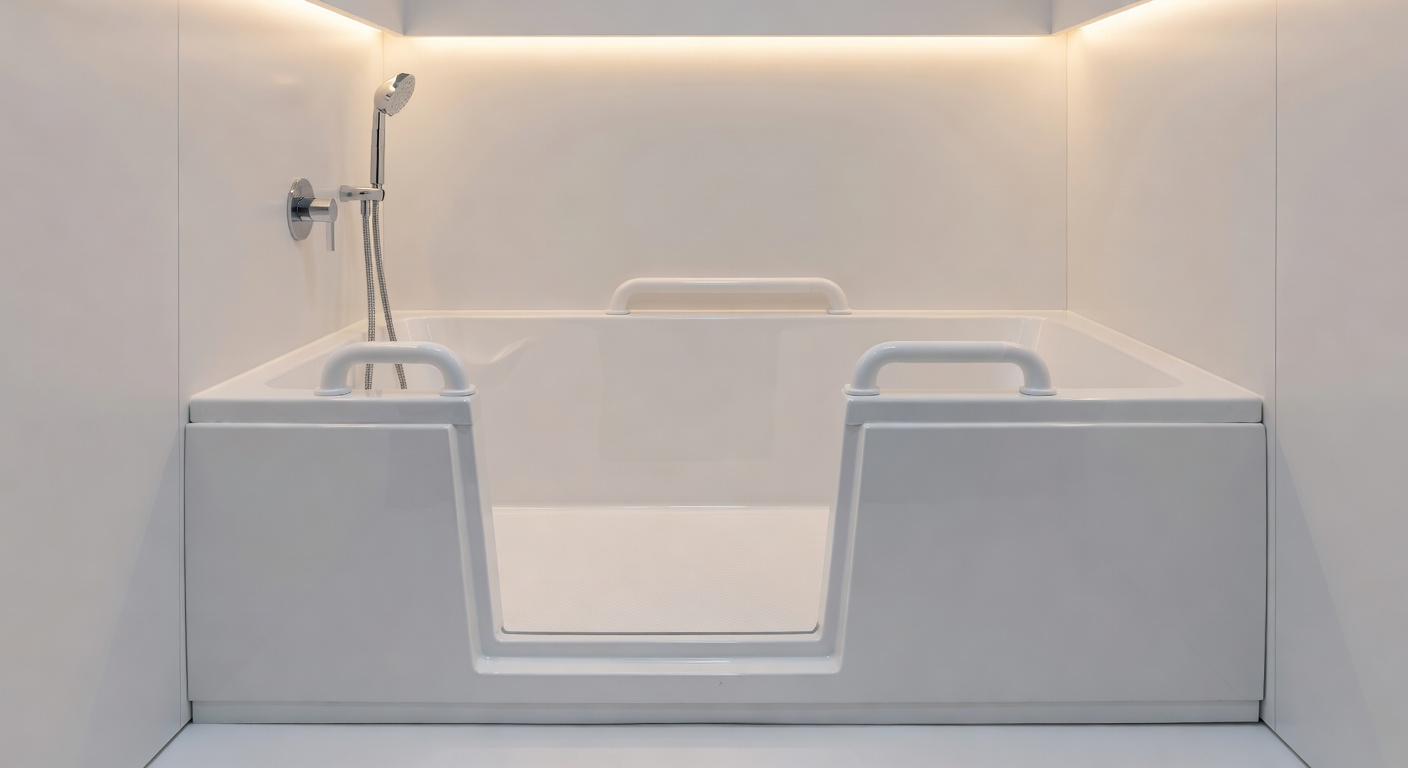
For homeowners who want to maintain bathing rather than transitioning to a shower-only setup, walk-in tub installation offers a safe, accessible alternative to the traditional bathtub. Walk-in tubs feature a built-in door that opens inward, a low entry threshold (typically 2″–4″), an integrated seat, and anti-slip flooring. Many models include hydrotherapy jets, which can provide meaningful relief for arthritis, circulation issues, or chronic pain.
One important consideration for Concord homeowners: walk-in tubs require filling the tub after the user is seated inside — which means the user must remain in the tub while it fills and drains. For homeowners with sensitivity to cold or certain health conditions, this can be a drawback compared to a walk-in shower. Discuss the specifics of daily use patterns with your contractor before deciding between a walk-in tub and a curbless shower.
Non-Slip Flooring
The shower floor is the highest-risk surface in any bathroom. ADA guidelines specify a wet slip-resistance coefficient of friction of 0.6 or higher. Stone composite shower bases from manufacturers like the Onyx Collection meet this standard with a built-in textured surface — providing grip without the grout lines that traditional tile slip-resistant flooring requires. Outside the shower, porcelain tile with a matte or textured finish and non-epoxy grout joints of 1/8″ or less is a standard specification for accessible bathroom floors.
Comfort-Height Toilet Installation
Standard toilets sit at 15″ seat height. Comfort-height or ADA-height toilets sit at 17″–19″ — approximately the height of a chair. For anyone with knee or hip issues, the difference in ease of sitting and standing is significant. Comfort-height toilets are available at every price point and are a straightforward upgrade that most homeowners who try once never go back from.
What to Expect From an Accessible Bathroom Contractor in Concord, NC
Not every bathroom remodeling contractor in the Cabarrus County area has experience with accessible design. Here is what to look for and what to ask:
| Question to Ask | What a Good Answer Looks Like |
|---|---|
| Have you installed ADA-compliant bathrooms in Concord area homes? | Specific examples with photos, willingness to provide local references |
| How do you handle curbless shower drainage? | Describes linear or center drain with sloped mortar bed or pre-sloped base |
| What blocking do you install for grab bars? | Describes specific blocking material, location in wall, and load capacity |
| What is the slip resistance rating of your shower base? | Provides specific COF rating — at least 0.6 wet |
| What does the warranty cover on accessible features? | Specific warranty terms in writing, covering both materials and labor |
Red flag to watch for: Contractors who reframe accessibility features as “extra add-ons” with separate pricing after the main quote has been presented. A quality accessible bathroom contractor plans the accessibility features into the design from the beginning — they are not afterthoughts.
Planning an Accessible Bathroom Remodel in Concord, NC
Here is a practical checklist for Concord homeowners preparing to plan an accessible bathroom remodel:
- Assess current mobility and projected future needs. If you are remodeling proactively, focus on features that are easy to include now and expensive to retrofit later: blocking, curbless drain prep, and doorway width.
- Measure your existing doorway width. ADA requires 36″ clear width. Many older Concord homes have 30″–32″ bathroom doorways. Widening a doorway during a bathroom remodel is significantly less expensive than doing it as a standalone project.
- Decide between walk-in shower and walk-in tub before you start. These are different products with different plumbing requirements. Knowing which direction you’re going before demo begins avoids mid-project changes that affect scope and cost.
- Specify blocking even if you’re not installing grab bars today. Tell your contractor you want 2×8 or 2×10 blocking installed in the shower walls and beside the toilet location, even if no grab bars are being installed in this remodel. This costs almost nothing and preserves the option indefinitely.
- Choose stone shower bases over tile for slip resistance. A pre-manufactured stone composite base from the Onyx Collection has a guaranteed slip-resistance rating and a uniform slope built in. Custom tile shower bases rely on the quality of the mortar bed installation for their slope — which varies by installer.
Schedule an Accessible Bathroom Consultation in Concord, NC
Carolina Creek Tub & Shower serves Concord and Cabarrus County homeowners with ADA-informed bathroom design, premium stone products, and a lifetime warranty on every project. Owner-led consultations — no pressure, just honest answers.