Get a Free Comfort Height Toilet Today
Accessible Bathroom Remodeling in Charlotte, NC — Safety Upgrades That Don’t Look Clinical
90%
Adults over 65 who prefer to age in place at home
80%+
Of all home falls that occur in the bathroom
1–4 Days
Typical accessible bathroom installation timeline
Lifetime
Warranty on all parts, materials, and labor
The phrase “accessible bathroom” used to conjure a specific image — white grab bars bolted to beige tile, a plastic shower chair, a vinyl floor with a non-slip texture that belonged in a hospital corridor. That image has not been accurate for years, but it persists in the minds of Charlotte homeowners who are considering accessibility upgrades and worry the result will look institutional rather than intentional.
This guide is for Charlotte homeowners who want a bathroom that is genuinely safe — for themselves, for aging parents, or for a family member with mobility needs — and that looks like a well-designed contemporary bathroom rather than a medical facility. The two goals are not in conflict. Here is how to achieve both.
Why Accessible Bathrooms Used to Look Clinical — and Why They No Longer Have To
The clinical look that defined accessible bathrooms for decades was not inevitable — it was a product of the materials and design vocabulary available at the time. White grab bars existed because they were cheap and easy to manufacture. Vinyl floors were used because they were the standard non-slip surface. Shower chairs were freestanding because showers were not designed with integrated seating.
Today, every one of those elements has a contemporary design equivalent that performs the same safety function without the institutional aesthetic:
- Grab bars are available in brushed nickel, matte black, oil-rubbed bronze, and polished chrome — in profiles that look like premium towel bars, not medical equipment.
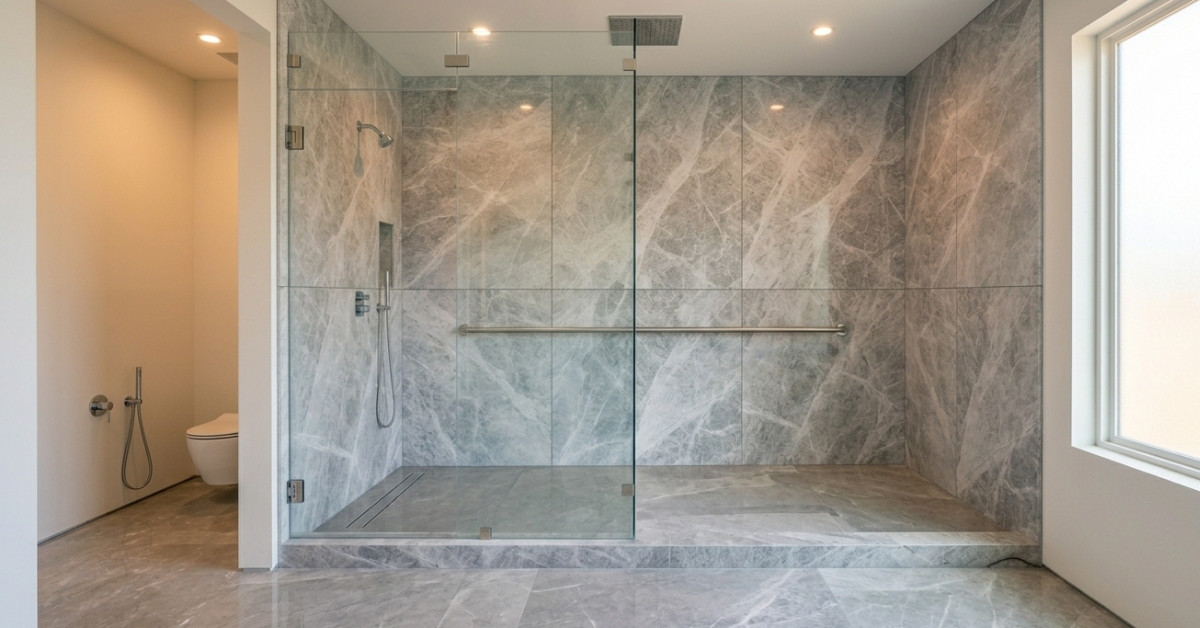
- Curbless showers are a mainstream luxury design feature — zero-threshold entries appear in high-end Charlotte master bathrooms across every price tier, entirely independent of accessibility considerations.
- Integrated bench seats built in stone are permanent, sleek design elements — not folding plastic additions bolted to the wall as an afterthought.
- Non-slip stone shower bases from manufacturers like the Onyx Collection have a built-in textured surface that meets ADA slip-resistance standards — and looks like premium stone, not institutional vinyl.
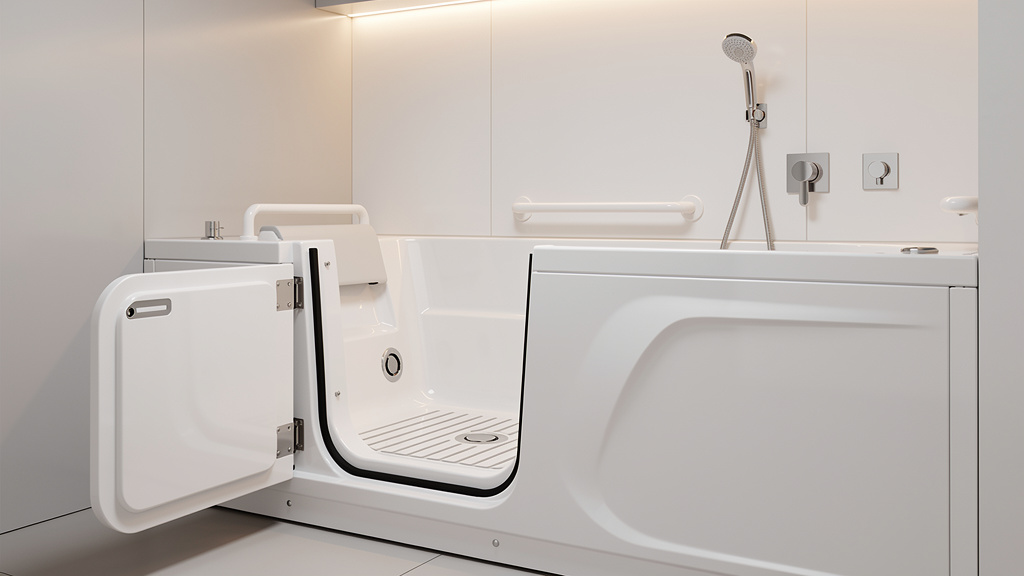
- Walk-in tubs have evolved significantly — contemporary models feature clean lines, jetted hydrotherapy, and finishes that complement modern vanities rather than contrasting with them.
The design principle: Accessible features that are integrated into the design from the beginning — rather than retrofitted onto an existing design — always look better. A curbless shower planned from the start looks modern and intentional. A threshold removed from an existing shower looks like a retrofit. The timing of the accessibility decision matters as much as the feature choice itself.
Accessible Bathroom Features That Work in Charlotte Homes
Curbless Shower Entry
A curbless shower — sometimes called a zero-threshold or barrier-free shower — has no step or raised edge at the entry. The shower floor slopes gently toward the drain without allowing water to escape the wet zone. It is the single most impactful accessibility upgrade in any Charlotte bathroom and the one most commonly requested by homeowners planning for long-term use of their home.
From a design standpoint, curbless showers are actively desirable in the Charlotte luxury market independent of accessibility. We use the same design principles for Matthews stone shower installations across the Charlotte metro. They make the bathroom feel larger, allow the shower’s stone surfaces to read as part of the broader space, and are standard in high-end bathrooms across the Myers Park, SouthPark, and Ballantyne neighborhoods. In a custom stone shower installation, a curbless entry adds very little cost when planned from the beginning of the project.
Grab Bars — Modern Finishes, Real Function
ADA guidelines specify grab bars at 33 to 36 inches height along shower walls and beside the toilet, mounted into structural blocking capable of supporting 250 pounds of lateral load. The blocking — installed between studs during the remodel — is what makes grab bars function safely. A grab bar screwed only into drywall is dangerous.
The visual concern most Charlotte homeowners have about grab bars disappears when the bars are specified in a coordinated finish — brushed nickel or matte black grab bars in a diameter profile that matches the towel bar and robe hook are simply part of the hardware design, not clinical additions. Delta and Moen both offer complete accessible bathroom hardware collections in contemporary finishes where the grab bar is designed to match every other hardware element in the room.
Integrated Stone Bench Seat
A bench seat built in the same stone composite material as the shower walls is a design feature as much as an accessibility feature. It provides a place to sit while showering, a surface to rest a leg while shaving, or a secure perch for anyone who needs to sit during bathing. Built as part of the original installation — rather than added as a freestanding teak stool or folding wall seat — a stone bench is permanent, seamlessly integrated, and visually cohesive with the rest of the shower design.
Handheld Showerhead on Slide Bar
A slide-bar mounted handheld showerhead that adjusts from full standing height to seated height is both an accessibility feature and a practical daily convenience — for washing a dog, rinsing the shower walls, or directing water to specific areas without repositioning the body. ADA guidelines specify a minimum 59-inch hose length. This is a standard feature in most Charlotte custom shower installations regardless of accessibility intent.
Non-Slip Stone Shower Base
The shower floor is the highest-risk surface in any bathroom. A stone composite shower base from the Onyx Collection has a built-in textured surface with a wet coefficient of friction exceeding the ADA minimum of 0.6. It is non-porous — no grout lines to harbor mold — and looks like premium stone throughout its lifetime. The performance advantage over standard tile with grout joints is significant in Charlotte’s humid summers, where mold in grout lines is a persistent maintenance challenge.
Walk-In Tub Installation
For Charlotte homeowners who specifically want to maintain bathing rather than converting to a shower-only setup, walk-in tub installation in Matthews and Davidson provides a low-entry bathing solution with a built-in door, integrated seating, anti-slip flooring, and optional hydrotherapy jets. Contemporary walk-in tub models have shed the institutional look of older designs — clean lines, integrated hardware, and neutral color options fit naturally into modern Charlotte bathrooms without announcing themselves as medical equipment.
Design Principles for Accessible Bathrooms in Charlotte Homes
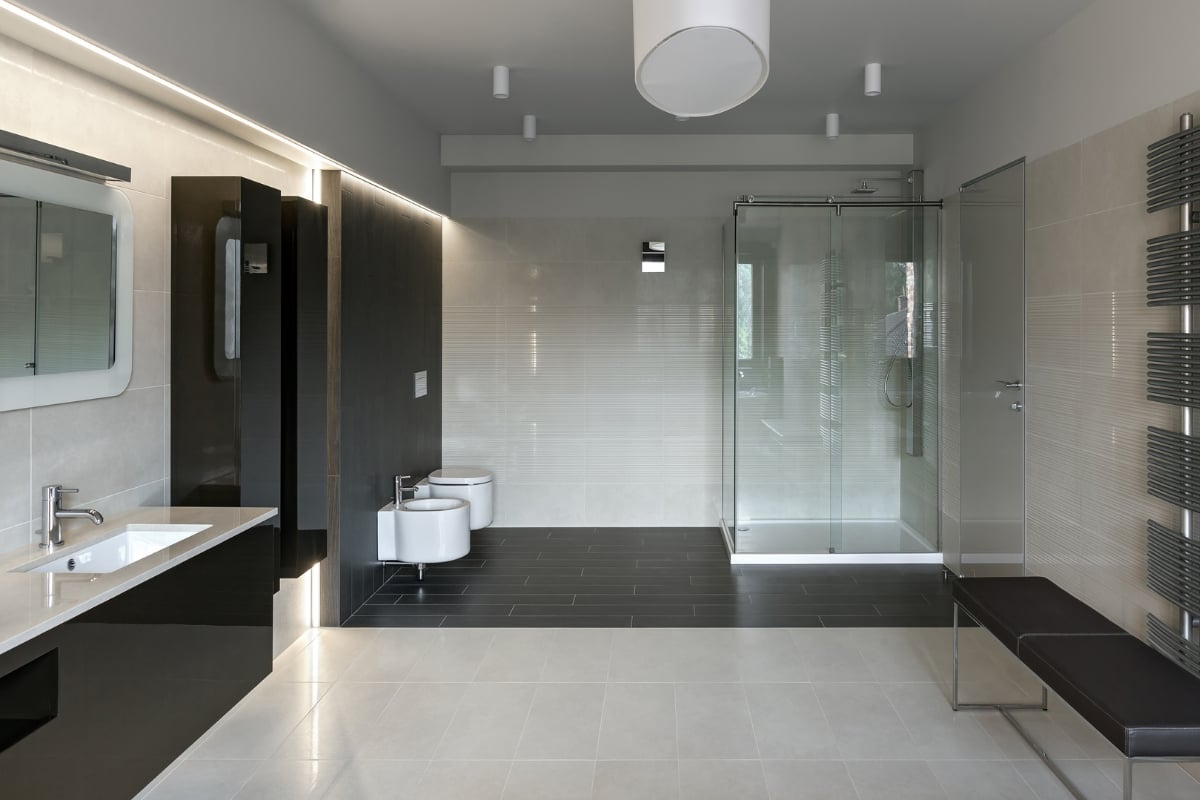
The difference between an accessible bathroom that looks clinical and one that looks designed comes down to a few specific choices:
Coordinate all hardware finishes
Grab bars, towel bars, robe hooks, faucets, and showerheads should all be in the same finish. When the grab bar matches the towel bar exactly, it reads as part of the hardware design — not a clinical add-on.
Choose stone over institutional materials
Stone composite shower panels, stone bases, and porcelain tile floors all perform well for accessibility while reading as premium finishes. Vinyl, acrylic, and rubber surfaces announce themselves as functional-over-aesthetic choices.
Integrate seating into the design
A stone bench built as part of the shower installation looks designed. A folding wall-mounted seat looks retrofitted. The former costs more but reads entirely differently to anyone who sees the bathroom.
Use frameless glass
Frameless glass enclosures on curbless showers read as luxury design. They open the visual space, allow the stone surfaces to be seen from the whole bathroom, and eliminate the framing that makes an enclosure feel like a barrier.
Plan the layout from accessibility up
Accessible features designed into the layout from the beginning look intentional. Features retrofitted onto an existing design look accommodated. If accessibility is a goal, include it in the initial design conversation — not as a last-minute addition.
Address the door width
ADA recommends 36 inches of clear door width. Many Charlotte homes have 30 to 32 inch bathroom doorways. Widening a doorway during a remodel is far less expensive than doing it as a standalone retrofit — and the result looks finished, not modified.
Proactive vs Reactive Accessibility — Why the Timing Matters
The most common version of the accessible bathroom conversation in Charlotte goes like this: a homeowner or family member experiences a fall, a surgery, or a mobility event, and the bathroom suddenly becomes the most urgent space in the home. Retrofits are rushed, decisions are made under pressure, and the result often does look clinical — because the priority was function, not design.
The alternative — planning accessibility features during a bathroom remodel that is happening anyway — costs very little in addition to the base project and produces a dramatically better result. Here is the cost comparison:
| Feature | Cost During a Remodel | Cost as a Standalone Retrofit |
|---|---|---|
| Grab bar blocking in walls | ~$50–$150 added cost | $800–$2,500 (open wall, patch, refinish) |
| Curbless shower entry | $200–$600 added cost | $2,000–$5,000 (floor demo, drain work) |
| Widened doorway | $400–$900 added cost | $1,500–$4,000 (structural, patching, painting) |
| Integrated stone bench seat | $300–$700 added cost | $1,000–$3,000 (open shower, rebuild) |
| Comfort-height toilet | $100–$300 added cost | $300–$600 (always possible, no major demo) |
The proactive case in Charlotte: If you are already remodeling a bathroom in your Charlotte home, the marginal cost of adding grab bar blocking, planning a curbless entry, and specifying a bench seat is typically $500 to $1,500. The same features as a standalone retrofit after a mobility event cost $4,000 to $10,000 — and the result looks retrofitted rather than designed.
Accessible Bathroom Remodeling in Charlotte — What to Expect
Charlotte is the largest city in Carolina Creek’s service area, and the accessible bathroom demand across the metro reflects the city’s demographics — a large and growing population of adults over 55, a significant healthcare and medical community, and a housing market where aging-in-place planning is increasingly mainstream.
Accessible bathroom remodeling in Charlotte typically costs:
- Focused accessibility upgrade (curbless shower, grab bars, bench, non-slip base): $4,000–$9,000
- Full accessible bathroom remodel (curbless shower, stone panels, grab bars, comfort-height toilet, new flooring, vanity): $12,000–$22,000
- Walk-in tub installation: $9,000–$18,000
- Accessible features added to a mid-range remodel: $500–$1,500 additional cost above standard remodel pricing
FAQ — Accessible Bathroom Remodeling in Charlotte, NC
Will accessible features affect my Charlotte home’s resale value?
Well-designed accessible features — curbless showers, integrated stone bench seating, coordinated grab bar hardware — do not negatively affect resale value in the Charlotte market and in many cases add to it, particularly in neighborhoods with a significant population of buyers over 55. Poorly executed retrofits that look clinical or mismatched can create a negative impression. Design quality matters more than the presence or absence of accessibility features.
What is the most important accessible feature to add in a Charlotte bathroom remodel?
Grab bar blocking is the most cost-effective accessible feature to add during any remodel. It costs $50 to $150 in materials during a bathroom remodel that is already opening the walls — and it provides the structural foundation for grab bar installation at any point in the future, without ever needing to open the wall again. You do not need to install the grab bars immediately. Install the blocking now and the bars whenever the need arises.
Can a walk-in shower replace a walk-in tub for accessibility in Charlotte?
For most accessibility needs, a curbless walk-in shower with grab bars, a bench seat, and a handheld showerhead provides better daily function than a walk-in tub — it is faster to use, easier to maintain, and eliminates the fill-and-drain cycle that requires waiting in the tub. A walk-in tub is the better choice when the homeowner specifically wants therapeutic bathing with hydrotherapy jets, or when bathing rather than showering is genuinely important to daily routine.
How do I find an accessible bathroom contractor in Charlotte who understands design?
Ask specifically how they approach accessible design — and look at photos of past projects. A contractor who shows accessible bathrooms that look genuinely designed understands how to integrate function and aesthetics. A contractor whose accessible bathrooms look institutional may be technically competent but is not the right choice if the appearance of the finished space matters to you. Carolina Creek Tub & Shower serves Charlotte homeowners with accessible bathroom designs that use premium stone products and coordinated hardware to produce results that are safe, functional, and genuinely beautiful.
Related Accessible Bathroom Services
- Accessible Bathroom Design Cornelius — full accessible bathroom design and installation for Cornelius homeowners planning ahead.
- Walk-In Tub Design Matthews, NC — walk-in tub installation across the Matthews and Charlotte metro area.
- Walk-In Tub Installation in Davidson, NC — accessible bathing solutions for Davidson homeowners.
- Walk-In Tub for Aging in Place Lake Norman — Lake Norman walk-in tub installation for aging in place.
- Stone Shower Installation Matthews, NC — accessible curbless stone showers for Matthews homeowners.
Schedule an Accessible Bathroom Consultation in Charlotte, NC
Owner-led consultations, premium stone products, coordinated accessible hardware, and a lifetime warranty on every project. We design accessible bathrooms in Charlotte that are safe and beautiful — not one or the other.